
Aligned to Scale: Three Days That Set IYT's Next Chapter
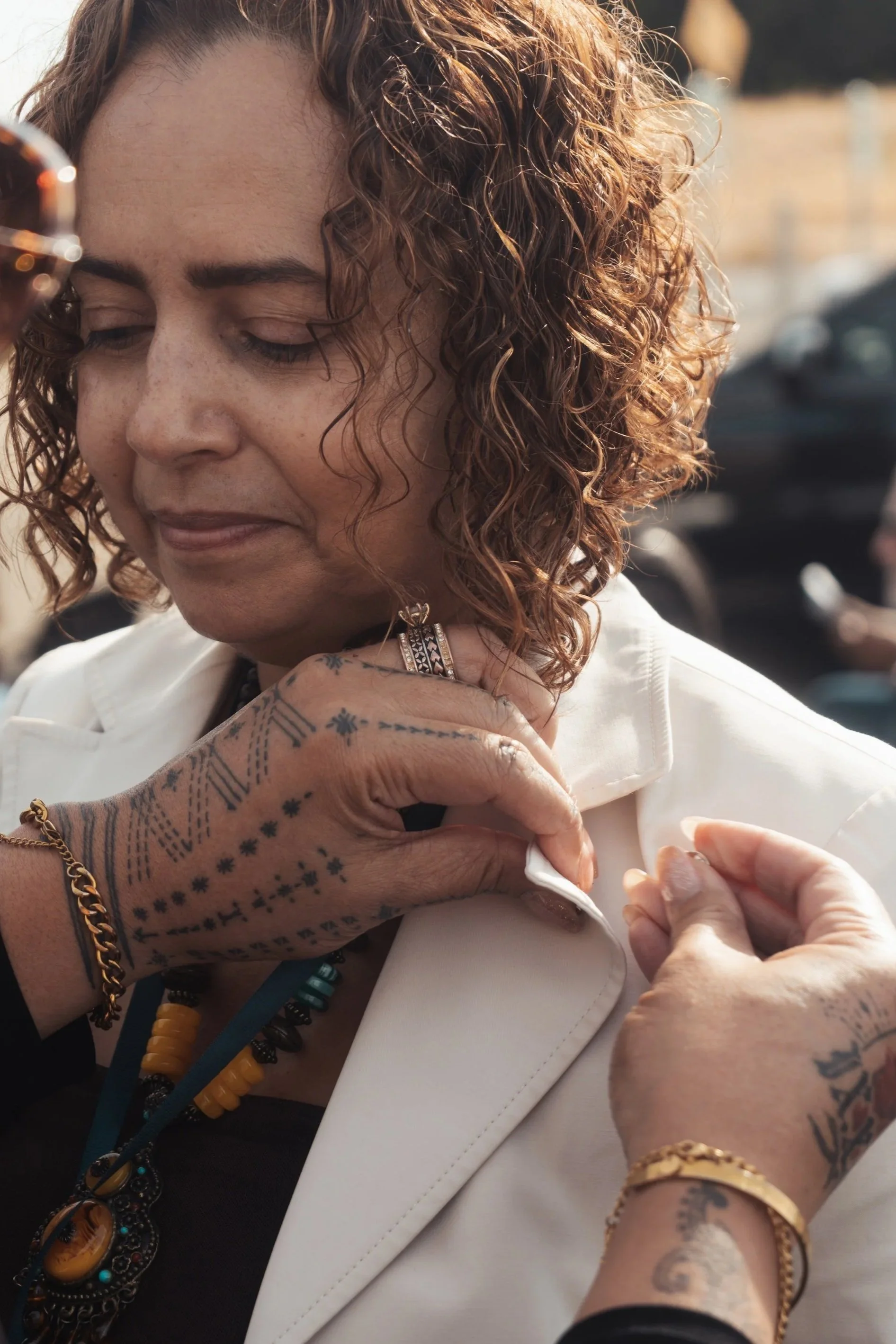
Mino Leon, Vice Chair of IYT Minnesota's Board of Advisors, receives her pin.
The pin was roughly the size of a thumbnail. On a Thursday morning in August, against a backdrop of Improve Your Tomorrow’s national headquarters in Sacramento and the rhythmic sounds of the Fenix Drum and Dance Company, board members from eight regions lined up to receive their pins. They were the first board pins issued in IYT history, and what they ask of the people wearing them is not ceremonial: open doors, make introductions, raise funds, and serve as a visible champion for these young men in their communities.
IYT serves young men of color from middle school through a college degree and into a career. It calls its members “Brothers.” Each student is paired with a mentor who has walked the same road, and that relationship covers more than grades. It follows his wellness, his interests, and who he is becoming. Around it sit academic study halls, college advising from application through graduation, campus visits, and a peer group where ambition is the expectation rather than the exception. All of it is free to families. Today IYT serves more than 5,000 Brothers in 24 cities across six states.
The need for this support is not abstract.
Picture ten young men just out of high school. In 2022, about three of every ten Black men aged 18 to 24 were in college, and fewer than three of every ten Latino men. Ten years earlier, both groups were at roughly one in three. Black men have stayed about where they were. Latino men have gone backward, from about one in three to closer to one in four. Latino men finish high school at nearly the same rate as Latina women, 89 percent against 92 percent. They are half of all college-age Latinos. Yet they are only 40 percent of the Latinos who actually enroll. They earn the diploma, and then a large share of them never make it onto a campus.
For Black students, the same story shows up as a raw number. Over the past decade, more than 600,000 Black students who were expected to be in college never got there, a bigger shortfall than for any other racial group, according to the Schott Foundation for Public Education's 2024 report Love is the Foundation for Life. These are not gaps in talent. They are gaps in support and investment.
IYT's vision is a nation where young men of color are overrepresented in higher education, underrepresented in the criminal justice system, and leading their communities. The pin identifies the people who have taken responsibility for closing that distance.
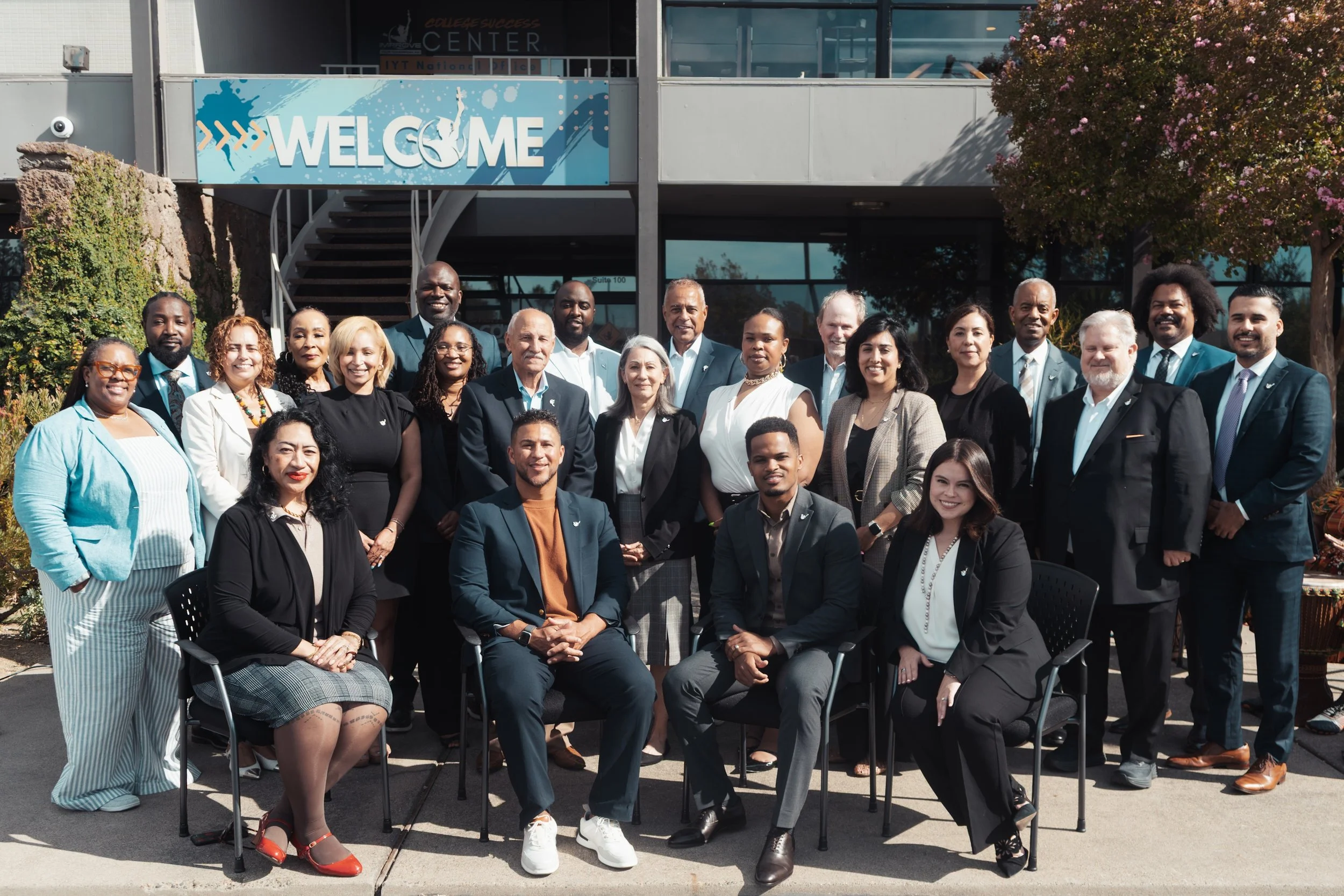
IYT's National Board of Directors and National Board of Advisors with co-founders Michael Lynch and Michael Casper at the Board Induction Ceremony in Sacramento, August 2026.
The pinning came on the final morning of three days that brought the board to Sacramento from the Bay Area, the Central Valley, Nevada, Wisconsin, Minnesota, Maryland, and Mississippi. They are education policy directors and chief people officers, university faculty and charter school leaders, corporate community affairs executives and the founder of an institute for Black men's health.
Angela Bass, who leads education policy work in Mississippi and joined the National Board of Directors this year, spent part of it talking with a student who laid out his ambitions and then everything standing between him and them. "IYT is preparing him to reach his dreams despite whatever obstacles may come his way," she said the next morning. "They're preparing him to look beyond what he can think about today, and prepare for a tomorrow that he hasn't even dreamed of yet."
What board members kept returning to was not the programming but the belonging built in those classrooms, between Brothers and the mentors who have already walked the road ahead of them. "The term brotherhood is not just something that IYT says. It is who they are," said Sonali Nijhawan, one of five new members of the National Board of Directors. Valerie Utsey, another new director, described what that produces: "Once you get someone through college, that means they're coming back to their community and providing opportunities for the next generation." That is the case for scale. One degree does not stay with one family.
Getting to 10,000 Brothers means growing through Title I schools and the neighborhoods around them, and that happens one local decision at a time. A district that opens its campuses. An employer that hires. A funder who moves first. Someone who makes an introduction to the person who can say yes.
Which is where the people in that room come in. The leaders you just read about are opening doors in their regions right now, making introductions and talking with superintendents, employers, funders, and community organizations about bringing IYT to more young men.
Every one of those conversations ends up somewhere specific: a young man in a study hall who did not have one last year, on a campus he had never pictured himself walking, with a mentor who knows his grades and also knows what he wants to become. That is what a partnership is for.
If you want to be part of that where you live, we want to hear from you.
Reach out to our leadership team and let's talk about what a partnership can look like in your region.
